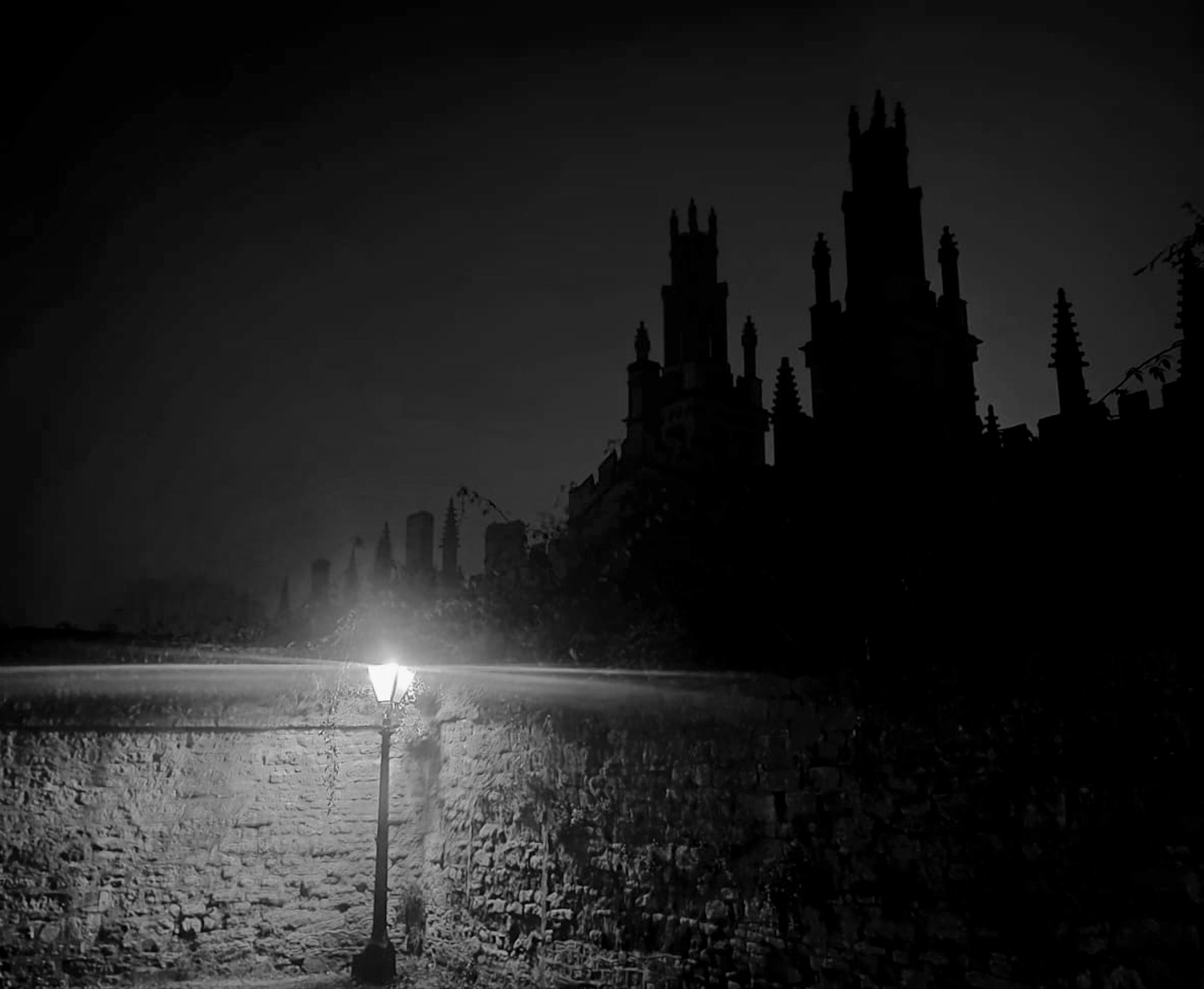
Oxford gives supernatural stories an unusual amount of material to work with. The people are named, the trials and executions are recorded, and many of the buildings remain close enough to touch. The apparitions belong to report and tradition rather than proof, but they endure because the lives beneath them are already dramatic.
Mary Blandy and the promise hidden in a powder
Mary Blandy was the only child of Francis Blandy, a lawyer in Henley. She fell in love with Henry Cranstoun, who was already married. Cranstoun sent her a powder and told her it would make her father approve their match. The powder contained arsenic. Francis became ill after Mary added it to his food and died in August 1751.
At her trial, Mary insisted that she had not known the powder was poison. The jury convicted her in March 1752, and she was hanged on 6 April, probably in the castle yard. Oxford Castle now displays a shackle associated with her confinement.
Later accounts place Mary's apparition around the castle and mound. Yet the story would remain unsettling without a ghost: a persuasive lover at a distance, a daughter administering a secret substance and a final claim that she understood too late what she had done. The reported return keeps that unresolved responsibility moving through the place.
George Napier and the head that never came home
George Napier was a Catholic priest convicted of high treason and executed at Oxford Castle in 1610. The sentence included hanging, drawing and quartering. According to the castle's history, his head was displayed on Tom Gateway and later disappeared.
Folklore gives the missing head a second career. A headless figure and a phantom horse are said to move around the castle precinct. The execution is documented. The apparition is not. What binds them is the unforgettable image of a body deliberately divided and a head whose fate remained unknown.
Empress Matilda, dressed for her own legend
During the civil war known as the Anarchy, forces loyal to King Stephen besieged Empress Matilda in Oxford Castle. Castle tradition tells how she escaped across a frozen landscape wearing a white cloak, disappearing into the snow as she crossed the Thames.
It is difficult to design a better origin for a ghost story. The historical flight already has danger, darkness, disguise and a figure in white. Later tellings allow Matilda to cross the same winter landscape again, no longer fleeing an army but returning as an apparition.
From the castle mound and St George's Tower, the geography of enclosure and escape becomes easier to imagine. The standard castle and prison visit enters those spaces, although the tower requires 101 steep spiral steps.
The Oxford Martyrs and the voices Broad Street still hears
Hugh Latimer and Nicholas Ridley were burned in October 1555 under Mary I. Thomas Cranmer followed in March 1556 after publicly rejecting the recantations he had signed. A cross in Broad Street marks the traditional execution site, while the elaborate Memorial near St Giles was erected in 1843.
Ghost walks add cries, figures and unease to the location. Those details cannot be tested like the dates of execution. What can be understood is why this busy stretch of road became fertile ground for haunting: public violence was used as religious theatre, and the city continued to pass over the same spot.
Cuthbert Shields and the fourth person in the room
Cuthbert Shields was born Robert Laing in 1840. After leaving Oxford in the late 1870s he changed his name, later returning to academic life and renewing his ties with Queen's College. In November 1886, he left the college books and a locked box of private papers that was to remain closed until 1936. He died in 1908.
One version of the college story places a white-haired presence near the opening of that box. A later librarian remembered an elderly man entering the Upper Library with a student and then vanishing. Queen's has traced how dates, rooms and details moved as the tale was retold, which makes the story more interesting rather than less. You can watch folklore editing itself around a real, secretive life.
The Upper Library is not open for casual exploration. See Queen's from the High Street or hear the story on an authorised tour, where the guide can supply the missing room without promising a sighting.
Why these stories work better on foot
Reading gives you names and chronology. A guide gives the stories scale. Broad Street can look almost too ordinary for martyrdom until someone points to the cross. Oxford Castle can feel like a collection of old structures until Mary, Matilda and Napier begin to occupy different parts of it.
For a walk led by atmosphere and voice, compare Oxford's five ghost-tour styles. For a daylight route to the places themselves, use our haunted places guide. Scepticism is no barrier. The pleasure lies in hearing how fact, memory and performance gather around the same stone.
Further reading: Oxford Castle: Mary Blandy · Oxford Castle: George Napier · Oxford Castle: spooky stories · Ashmolean: Oxford Martyrs · Queen's College: If the dead can haunt us
When you want the history without the return
Our guide to Oxford's dark history follows the Black Assize, the prison, Mary Blandy and the city's last execution without asking any of them to become supernatural.